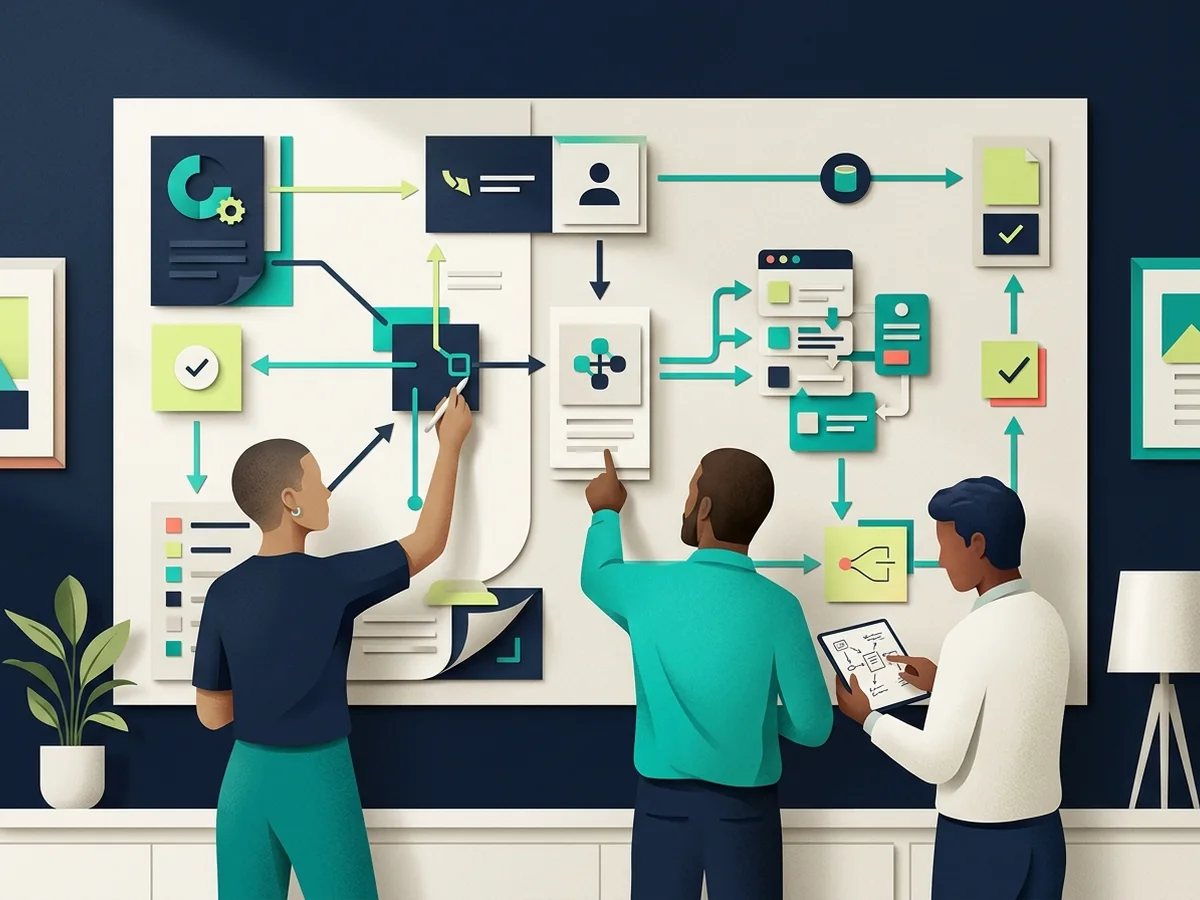
Training should rehearse the decisions staff actually face
A yearly slide deck is not enough. Use short scenarios based on real work, give people a safe reporting path, and measure whether the process improves after practice.
Give each important decision an owner and a test
Role-based scenario
Finance, support, administrators, leaders, and general staff face different requests and access risks.
Reporting route
Staff need one memorable way to report a message, mistake, lost device, or suspicious change.
Follow-up measure
Track reporting speed, repeated confusion, and process gaps rather than only quiz scores.
Operational dependencies to assign
A realistic exercise tests a work decision.
Practice the verification and reporting steps.A no-blame report reveals an incident early.
Fast reporting often matters more than perfect prevention.Move from document to repeatable operation
Measure reporting and response instead of trick-click rates alone.
A yearly slide deck is not enough. Use short scenarios based on real work, give people a safe reporting path, and measure whether the process improves after practice.
Role-based scenario
Finance, support, administrators, leaders, and general staff face different requests and access risks.
Reporting route
Staff need one memorable way to report a message, mistake, lost device, or suspicious change.
Follow-up measure
Track reporting speed, repeated confusion, and process gaps rather than only quiz scores.
Record what would prove the program works
| Operating condition | Business consequence | Owner or evidence |
|---|---|---|
| Role-based scenario | Finance, support, administrators, leaders, and general staff face different requests and access risks. | Practice the verification and reporting steps. |
| Reporting route | Staff need one memorable way to report a message, mistake, lost device, or suspicious change. | Fast reporting often matters more than perfect prevention. |
| Follow-up measure | Track reporting speed, repeated confusion, and process gaps rather than only quiz scores. | Teach one behavior per session and repeat it in the tools staff already use. |
Teach one behavior per session and repeat it in the tools staff already use.
Sources for Employee security training
Confirm current instructions and limits for this specific task before acting.
Design one role-specific practice exercise
Measure whether staff report and route a realistic decision correctly, not whether a trick produces clicks.
| Role and scenario | Expected decision | Evidence and follow-up |
|---|---|---|
| Finance and urgent payment | Verify through the approved second channel | Approval record and coaching need |
| Support and account recovery | Follow identity checks without requesting prohibited secrets | Case review and exception |
| All staff and suspicious messages | Report through the known channel without forwarding risk | Reporting time and response ownership |
Completion test: The exercise has a named audience, safe reporting route, response owner, and improvement action.
Train the decisions employees actually make
Build scenarios around the organization's real tools and processes: changed payment instructions, shared files, password resets, customer-data requests, remote support, and lost devices. Generic awareness slides are less useful when they do not show the approved alternative.
Make reporting quick, safe, and visible. Employees should know where to send a suspicious message, what evidence to keep, and what happens next. Reward early reporting, including mistaken clicks, because delay and concealment increase the cost of response.
Measure useful behavior rather than humiliation. Reporting speed, correct escalation, use of known-channel verification, and completion of role-specific exercises reveal more than a trick-click score alone. Use results to improve controls and procedures, not merely rank people.
Repeat short exercises when tools, threats, or responsibilities change. Completion means staff can demonstrate the expected response, managers follow the same rules, and the security team can show how training findings changed a process or control.
Give higher-risk roles additional practice that matches their authority. Finance, support, administrators, executives, and people handling customer data face different requests and consequences, so one annual module should not be treated as equal preparation for every role.
Connect the program to its operational dependencies
Connect this decision to the owners, evidence, and recovery process that keep operations moving. Use the Business cybersecurity basics hub for the complete topic pathway, then continue with Phishing prevention, Scam detection, and Small-business security policy.
AI scenarios should follow the workplace AI policy rather than improvised rules.
Training reports need an owner after submission, so connect the exercise to the team's incident response roles.
Give staff a precise escalation path for suspicious invoices with the business email compromise response.