Use AI without oversharing
Protecting your privacy from AI tools and AI scams
Control what AI systems learn about you and recognize synthetic-media scams before they create urgency.
The big picture
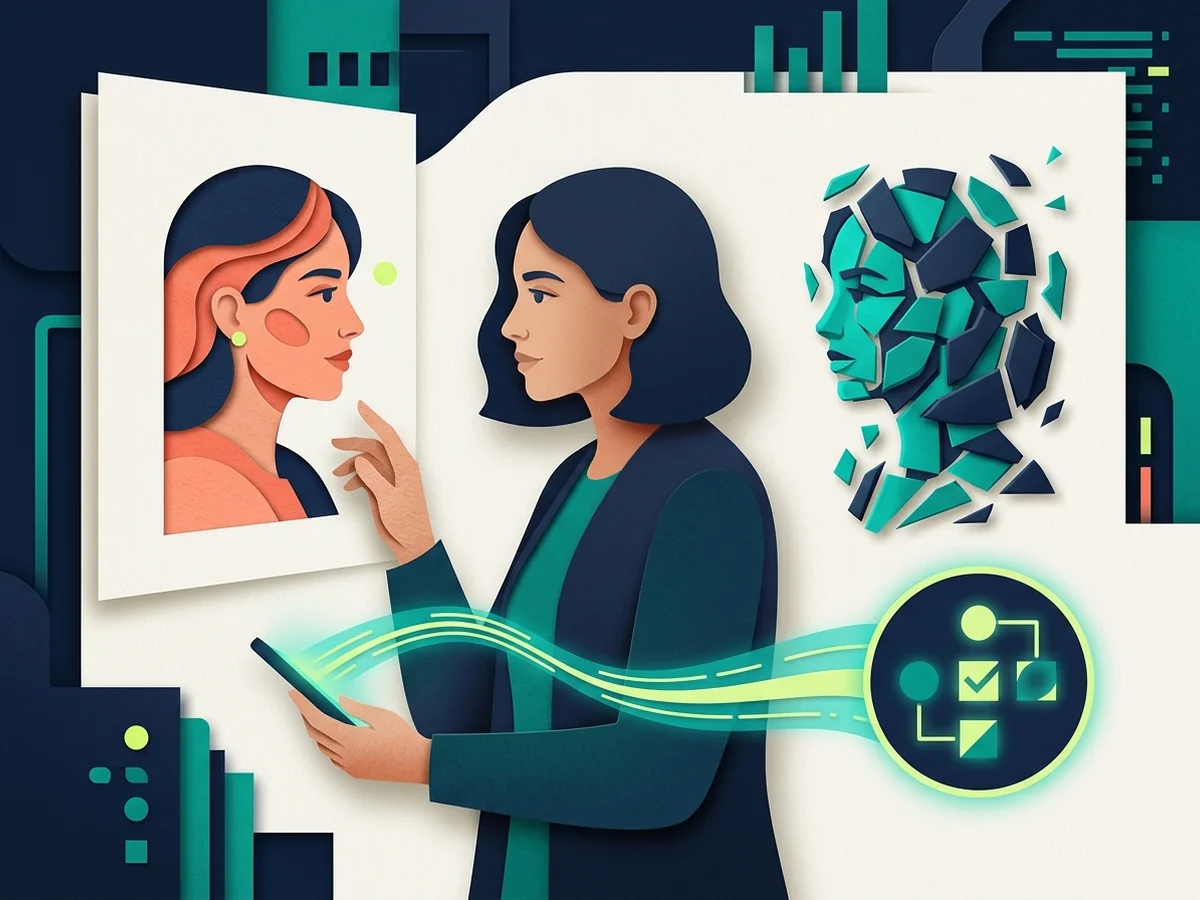
Protection works in layers.
AI changes the speed and plausibility of familiar risks: impersonation, phishing, profiling, and accidental disclosure. The durable response is verification plus data minimization—not trying to detect every generated artifact by eye.
AI safety overlaps with privacy, identity verification, and the everyday scam decisions people make under pressure. Explore Online privacy & data control, Identity theft protection, and A safer digital life.
- 01
Do not paste secrets or regulated data into consumer tools
- 02
Verify voices and video through another channel
- 03
Review retention and training controls
- 04
Assume public media can be copied
Private, in-browser check
AI sharing check
Answer four quick prompts. The result stays in this tab and points you to a relevant guide.
Hub & spoke library
Follow the full pathway.
Start with the guide closest to your situation. Each spoke returns here so you can move from immediate action to long-term protection.
How AI models use your data
Separate prompts, account telemetry, retained files, feedback, and training use so policies are easier to evaluate.
Preventing AI identity theft
Prepare for faster, more convincing impersonation that combines public details, generated content, and stolen credentials.
AI voice cloning protection
Recognize the limits of voice recognition and respond safely to urgent calls that sound like someone you know.
Deepfake prevention basics
Assess source, context, incentives, and corroboration instead of trusting visual artifacts alone.
AI safety tools
Use provenance, moderation, access controls, monitoring, and human review where each actually helps.
AI data permissions & sharing controls
Review training opt-outs, chat history, retention, connectors, files, and workspace access.
AI privacy laws overview
Frame AI issues through existing rights around access, deletion, objection, explanation, and human review.
At a glance
A working model
Use this table to connect the control to the result and the moment it needs attention.
| Layer | What it changes | When to use it |
|---|---|---|
| Sensitive prompt | Retention or unintended disclosure | Redact or use approved tooling |
| Voice request | Cloned-family or executive scam | Call a known number |
| Synthetic video | False authority or urgency | Check source and context |
| Automated decision | Opaque or incorrect outcome | Request explanation/review |